agra · attraction
Plan your visit to Taj Mahal
The Taj Mahal is an ivory-white marble mausoleum on the right bank of the Yamuna River in Agra, built by Mughal Emperor Shah Jahan in memory of his wife Mumtaz Mahal.
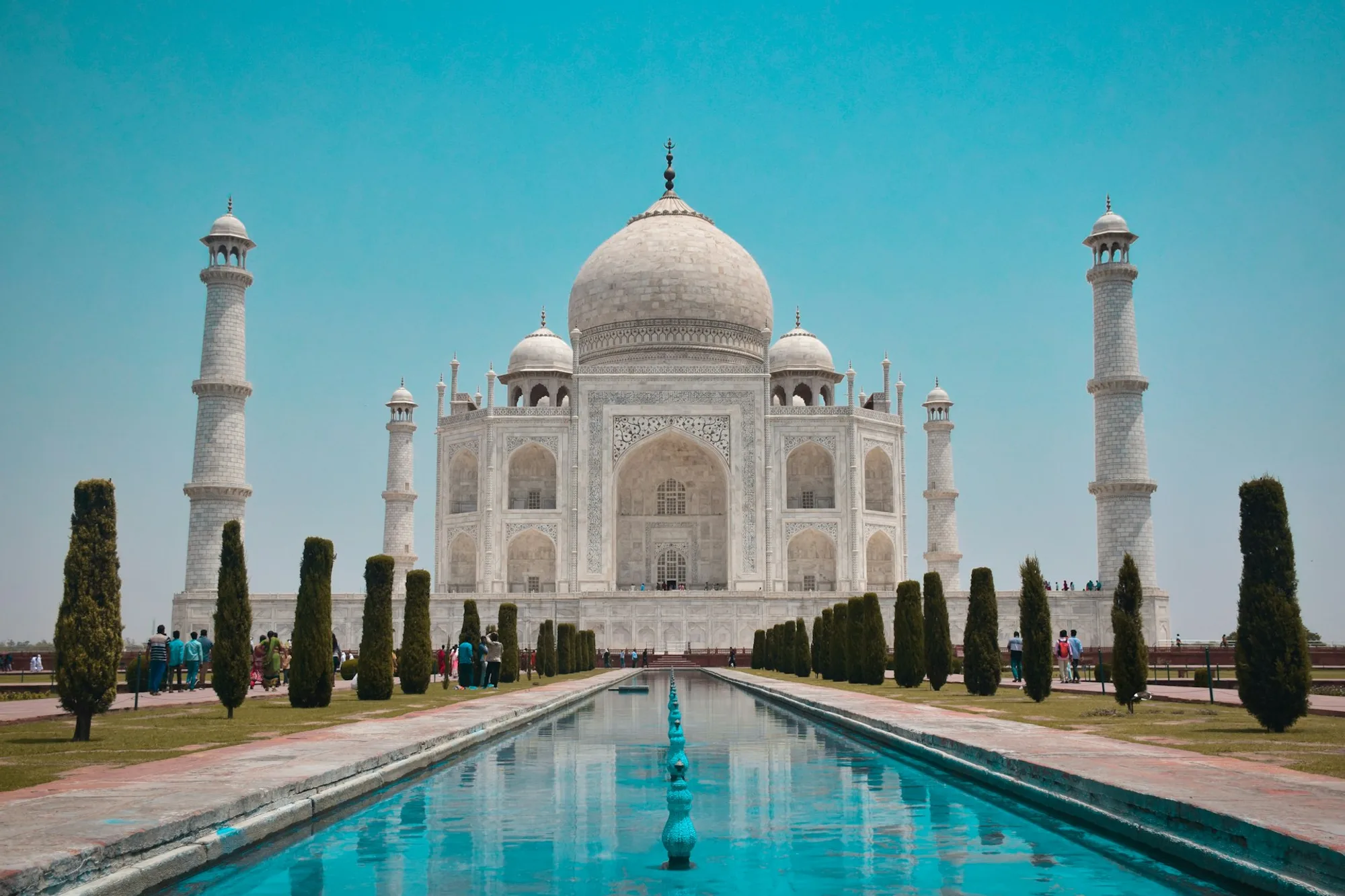
Taj Mahal · East Gate · 06:24 IST
What Makes the Taj Mahal So Special?
The Taj Mahal is widely regarded as the finest example of Mughal architecture and one of the most beautiful buildings ever created. Commissioned in 1632 by Emperor Shah Jahan as a mausoleum for his beloved wife Mumtaz Mahal, who died during the birth of their 14th child, the monument took approximately 22 years to complete. According to the Archaeological Survey of India (ASI), over 20,000 artisans worked on the project, with materials sourced from across Asia — white marble from Makrana in Rajasthan, jade and crystal from China, turquoise from Tibet, and lapis lazuli from Afghanistan.
UNESCO designated the Taj Mahal as a World Heritage Site in 1983, describing it as a masterpiece of the world’s heritage. It receives an estimated 7-8 million visitors annually (source: ASI annual reports), making it India’s most visited monument.
What Will You See Inside the Taj Mahal Complex?
The Taj Mahal sits within a 17-hectare complex enclosed by red sandstone walls. Upon entering through the Great Gate (Darwaza-i-Rauza), visitors are greeted by the Charbagh — a Mughal-style garden divided into four quadrants by water channels, symbolizing the four rivers of paradise described in the Quran.
The mausoleum itself rises on a raised marble platform. The central dome stands 73 meters (240 feet) from the base to the tip of the finial. Four minarets, each 40 meters tall, frame the main structure at a slight outward angle — an engineering decision made so that in the event of an earthquake, they would fall away from the mausoleum rather than onto it.
Inside the octagonal chamber, the cenotaphs of Shah Jahan and Mumtaz Mahal are surrounded by an intricate marble lattice screen (jali). The actual burial site is in a lower vault directly beneath, accessible only to maintenance staff.
How Should You Plan Your Visit?
We recommend arriving at the ticket counter at least 30 minutes before the gates open. During peak season (November to February), the Taj Mahal receives upwards of 20,000-30,000 visitors per day, so early arrival is critical.
Three gates provide access: the East Gate (Shilpgram), West Gate, and South Gate. Our guides typically use the East Gate, which has the shortest queues and offers the most dramatic first view as you step through the Great Gate.
Our same-day Agra tour from Delhi is timed so that you reach the Taj Mahal shortly after sunrise, giving you the best light and the thinnest crowds. For those with more time, our Golden Triangle 3-day tour pairs the Taj Mahal with Agra Fort and the highlights of Delhi and Jaipur.
What Is the History Behind the Taj Mahal?
Construction began in 1632 and the main mausoleum was completed by 1643, though the surrounding complex, gardens, and ancillary buildings took until approximately 1653 to finish. The lead architect is widely believed to be Ustad Ahmad Lahauri, though historical records mention a team of architects from across the Mughal Empire.
The total cost of construction has been estimated at approximately 32 million rupees in the currency of that era, which scholars estimate would translate to roughly 1 billion USD in today’s terms (source: Ebba Koch, “The Complete Taj Mahal,” Thames & Hudson).
Shah Jahan was eventually deposed by his son Aurangzeb in 1658 and spent his final eight years imprisoned in Agra Fort, where he could gaze at the Taj Mahal from his quarters in the Musamman Burj. Upon his death in 1666, he was buried beside Mumtaz Mahal, the only asymmetrical element in the otherwise perfectly symmetrical complex.
Photo Gallery
Location
Dharmapuri, Forest Colony, Tajganj, Agra, Uttar Pradesh 282001
More Attractions in Agra
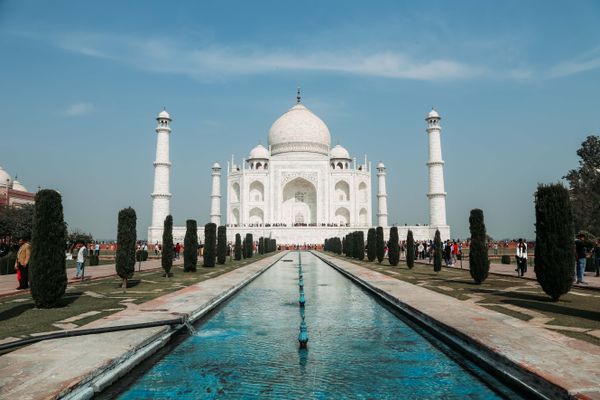 agra 1.5-2 hours
 Agra Fort
Agra Fort is a massive red sandstone fortress on the banks of the Yamuna River, serving as the main residence of Mughal emperors for generations until the capital shifted to Delhi.
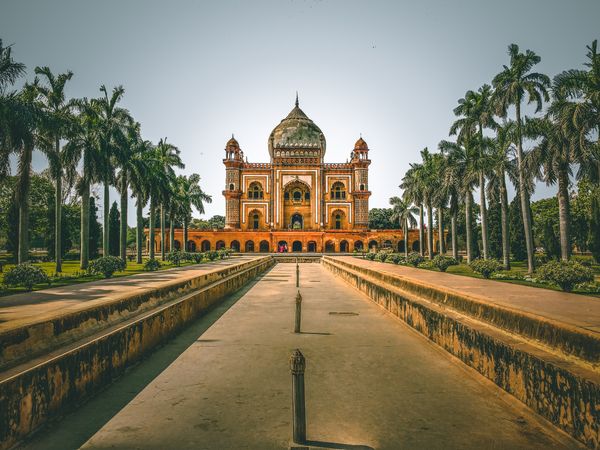 agra 2-3 hours
 Fatehpur Sikri
Fatehpur Sikri is a 16th-century ghost city built by Emperor Akbar as his capital, abandoned after just 14 years due to water scarcity, and remarkably well preserved.
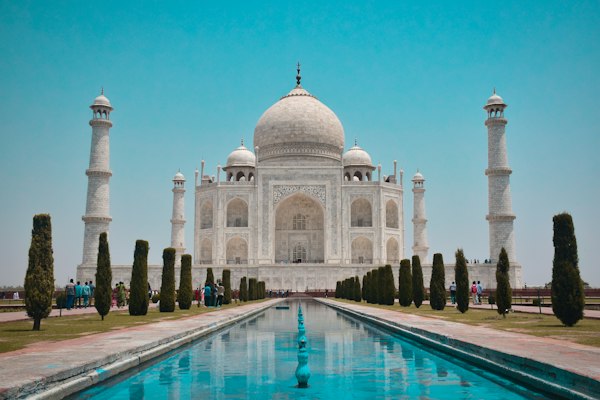 agra 1-1.5 hours
 Mehtab Bagh
Mehtab Bagh (Moonlight Garden) sits directly across the Yamuna River from the Taj Mahal, offering the most celebrated sunset views and a serene alternative perspective.
Tours Including Taj Mahal
2 Days / 1 Night Agra Overnight Tour from Delhi
- Sunrise visit to the Taj Mahal
- Sunset at Mehtab Bagh with Taj Mahal views
- Guided tour of Agra Fort and Baby Taj
3 Days / 2 Nights Golden Triangle Tour — 3 Days
- Sunrise visit to the Taj Mahal
- Guided tour of Red Fort and Jama Masjid in Old Delhi
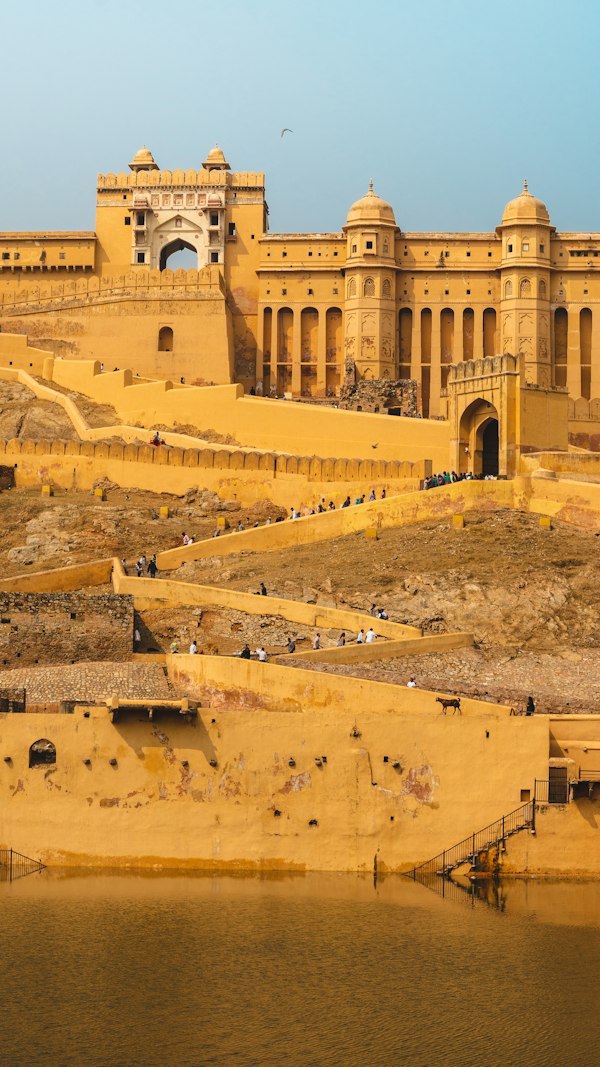
- Elephant/jeep ride to Amber Fort
 5 Days / 4 Nights
 Golden Triangle Tour — 5 Days
- Sunrise and sunset Taj Mahal views
- Chandni Chowk food walk in Old Delhi
- Amber Fort with Sheesh Mahal candlelight demo
Frequently Asked Questions
How much does it cost to visit the Taj Mahal?
As of 2024, Indian nationals pay ₹50 and foreign tourists pay ₹1,100. An additional ₹200 grants access inside the main mausoleum. Children under 15 enter free. Fees are set by the Archaeological Survey of India (ASI).
What is the best time of day to visit the Taj Mahal?
Sunrise is the best time. The soft golden light on the white marble is spectacular, and you avoid the midday crowds. Our guides recommend arriving by 5:30 AM at the ticket counter during winter months.
Why is the Taj Mahal closed on Fridays?
The Taj Mahal complex includes a functioning mosque (Masjid) on the west side. Friday is the Islamic day of congregational prayer (Jumu'ah), so the entire complex is closed to tourists to allow worshippers to pray.
Can you take photos inside the Taj Mahal?
Photography is allowed throughout the complex grounds and gardens, but photography and videography are strictly prohibited inside the main mausoleum chamber where the cenotaphs of Shah Jahan and Mumtaz Mahal are located.
How long does it take to see the Taj Mahal?
Most visitors spend 2-3 hours at the Taj Mahal. This includes time for the main mausoleum, the mosque, the guest house (Jawab), and the Charbagh gardens. Photography enthusiasts often spend 3-4 hours to capture different light conditions.
Plan your trip
Want a Guided Tour of Taj Mahal?
Our licensed guides bring history to life with stories and insights you won't find in any guidebook.