Experience the Golden Triangle
Discover India's Hawa Mahal
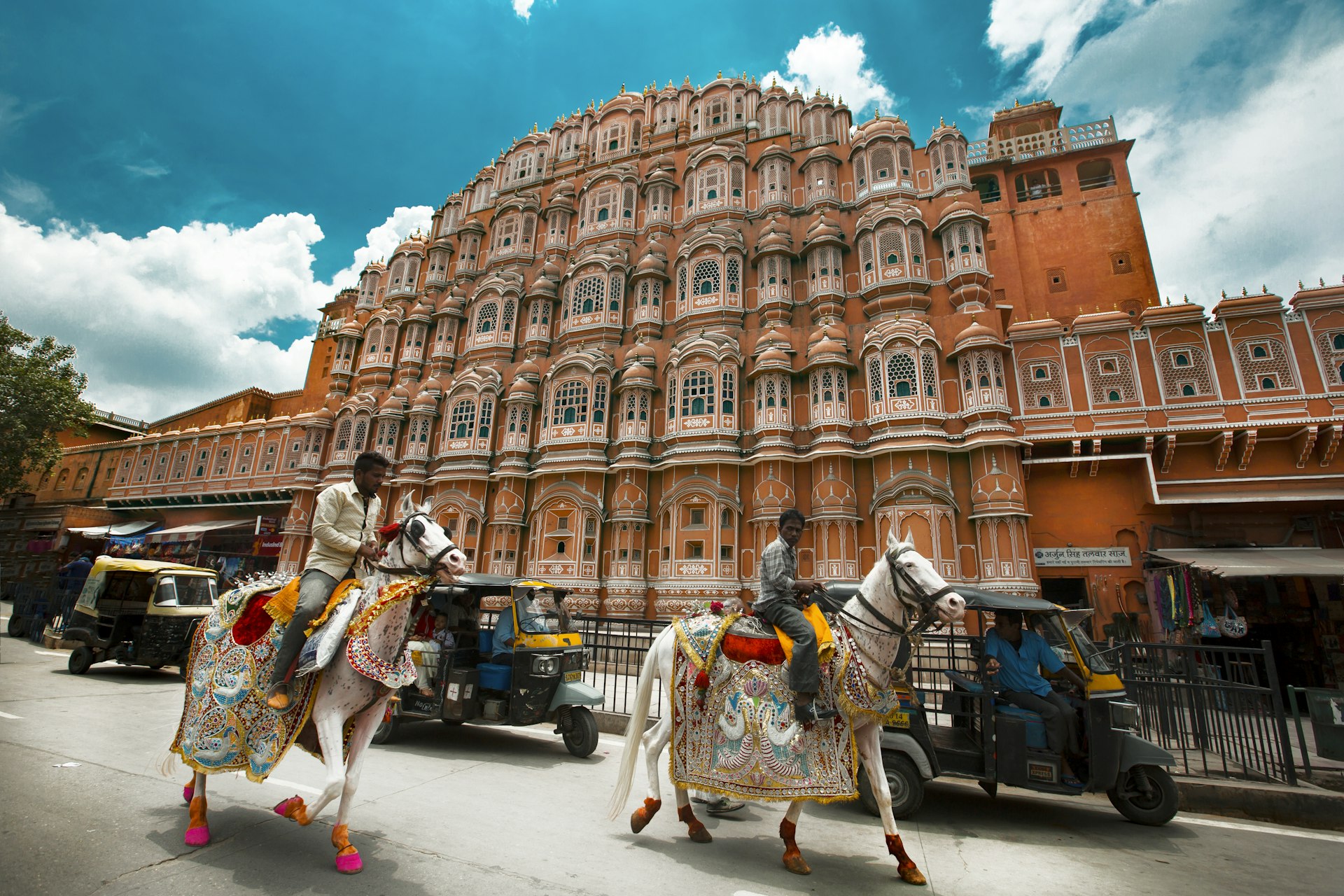
Hawa Mahal (Palace of Winds) is Jaipur's most iconic landmark, a five-story pink sandstone facade with 953 ornate windows built in 1799 for royal women to observe street life.
What Is Hawa Mahal?
Hawa Mahal (Palace of Winds) is the most photographed building in Jaipur and a defining symbol of Rajasthan. Built in 1799 by Maharaja Sawai Pratap Singh, this five-story pink sandstone structure features an extraordinary honeycomb facade of 953 small windows (jharokhas) — each fitted with intricate lattice screens.
The structure was designed by Lal Chand Ustad in the form of the crown of Lord Krishna, to whom Sawai Pratap Singh was devoted. Standing at 15 meters (approximately 50 feet), the building is remarkably slender — at its thickest point, it is only one room deep. The Venturi effect created by the lattice design channeled cool breezes through the building, making it a comfortable retreat during Jaipur’s scorching summers.
Why Was Hawa Mahal Built?
The primary purpose was social rather than architectural. Under the purdah system practiced by the Rajput court, women of the royal household were not permitted to appear in public. The 953 jharokhas allowed the queens and princesses to observe the colorful street processions, markets, and festivals below without being visible to the public.
Each window is designed like a small balcony with a curved roof, miniature columns, and filigree screens. The windows also provided excellent ventilation — even on the hottest days, cool air circulated through the narrow passages, earning the structure its name.
What Will You See Inside Hawa Mahal?
While the exterior is the main attraction, the interior rewards visitors who explore it. The building is accessed from the rear through a series of ramps (there are no staircases) connecting the five floors. Each floor has a distinct name and character: Sharad Mandir, Ratan Mandir, Vichitra Mandir, Prakash Mandir, and Hawa Mandir at the top.
From the upper floors, you get panoramic views of Jantar Mantar, City Palace, and the Siredeori Bazaar below. The top-floor view is particularly striking in the early morning when the city is bathed in soft light.
How Should You Plan Your Visit?
Hawa Mahal sits on the edge of the old walled city, facing east. The facade is best photographed in the morning when direct sunlight illuminates the pink sandstone. Our Jaipur day tour typically includes Hawa Mahal after Amber Fort, as it is conveniently located next to City Palace and Jantar Mantar.
The entrance is from the rear of the building — follow the signs down a side lane from Hawa Mahal Road. The visit pairs naturally with a walk through Johari Bazaar and Bapu Bazaar, Jaipur’s famous shopping streets for textiles, jewelry, and handicrafts.
Photo Gallery
Location
Hawa Mahal Road, Badi Choupad, J.D.A. Market, Jaipur, Rajasthan 302002
More Attractions in Jaipur
 jaipur 2-3 hours
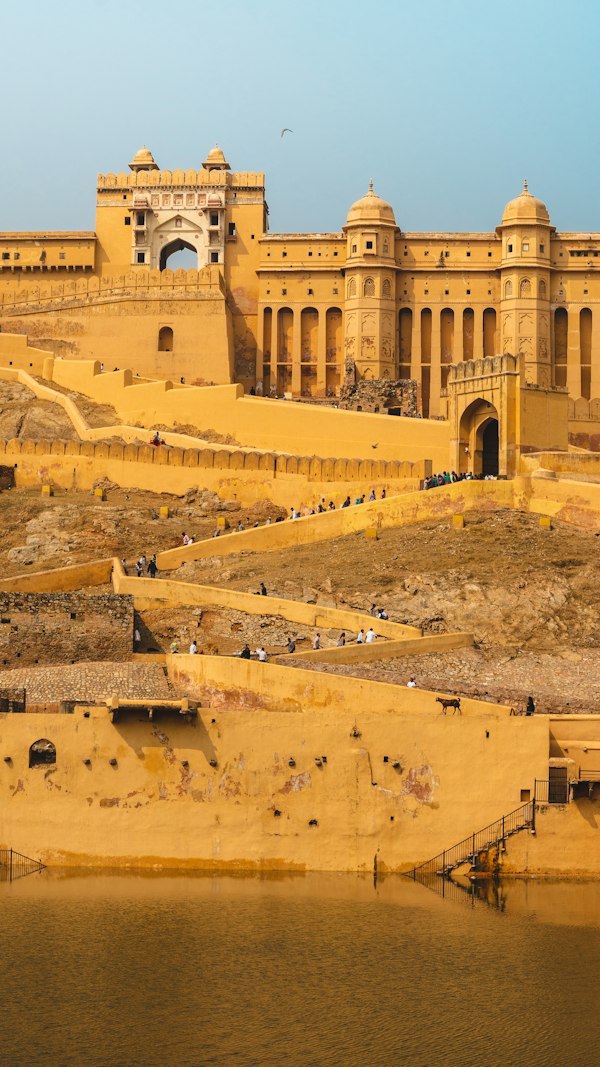
 Amber Fort
Amber Fort (Amer Fort) is a majestic hilltop fortress 11 km from Jaipur, blending Rajput and Mughal architecture with the celebrated Sheesh Mahal (Hall of Mirrors).
 jaipur 1.5-2 hours
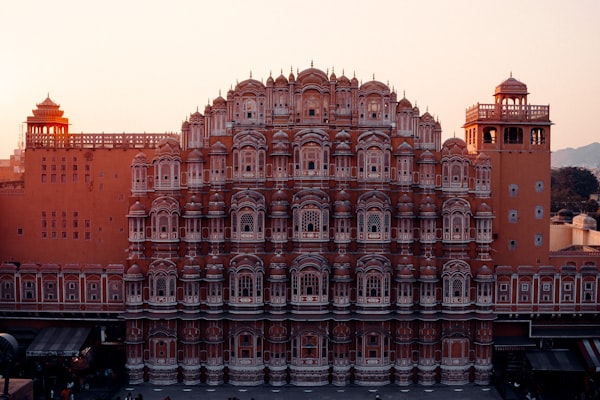
 City Palace
Jaipur's City Palace is a magnificent complex of courtyards, gardens, and buildings that remains the residence of the Jaipur royal family and houses a world-class museum.
 jaipur 45 minutes – 1 hour
 Jantar Mantar
Jantar Mantar is an 18th-century astronomical observation site in Jaipur housing the world's largest stone sundial, a UNESCO World Heritage Site still accurate to this day.
Tours Including Hawa Mahal
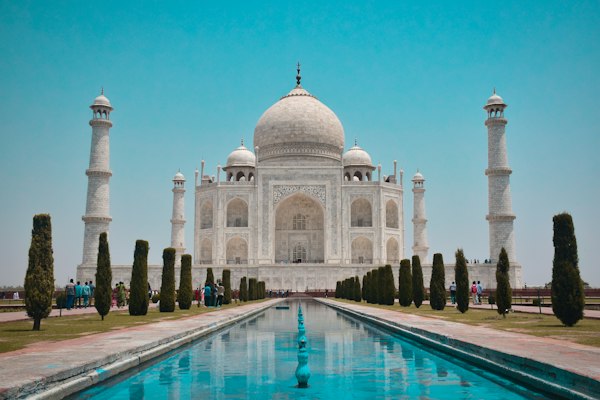 3 Days / 2 Nights
 Golden Triangle Tour — 3 Days
- Sunrise visit to the Taj Mahal
- Guided tour of Red Fort and Jama Masjid in Old Delhi
- Elephant/jeep ride to Amber Fort
5 Days / 4 Nights Golden Triangle Tour — 5 Days
- Sunrise and sunset Taj Mahal views
- Chandni Chowk food walk in Old Delhi
- Amber Fort with Sheesh Mahal candlelight demo
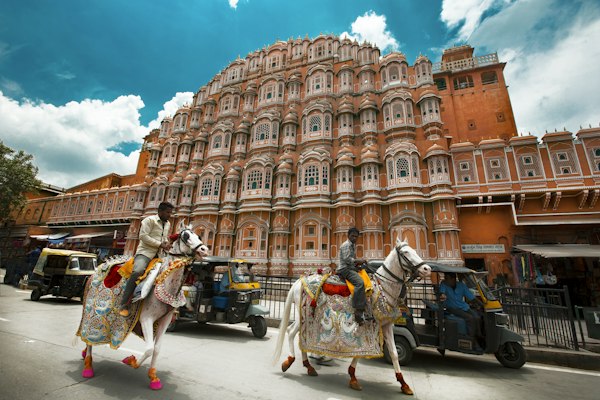 1 Day
1 Day Jaipur Day Tour
- Amber Fort with Sheesh Mahal (Mirror Palace)
- Hawa Mahal — the iconic Palace of Winds
- City Palace museum and royal collections
Frequently Asked Questions
Want a Guided Tour of Hawa Mahal?
Our licensed guides bring history to life with stories and insights you won't find in any guidebook.