Experience the Golden Triangle
Discover India's Jaipur
Known as the Pink City, Jaipur dazzles with majestic hilltop forts, ornate palaces, vibrant bazaars, and a living royal heritage in the heart of Rajasthan.
Why Should You Visit Jaipur?
Jaipur, the capital of Rajasthan, was founded in 1727 by Maharaja Sawai Jai Singh II, making it one of India’s first planned cities. In 2019, UNESCO inscribed the walled city of Jaipur as a World Heritage Site, recognizing its exceptional urban planning that blended Hindu and Vastu Shastra principles with Western grid layouts. According to the Rajasthan Tourism Department, the city welcomes over 5 million visitors annually.
As the third vertex of the Golden Triangle (along with Delhi and Agra), Jaipur is an essential stop on any North India itinerary. Our guides bring the city’s royal heritage to life, connecting you with stories of Rajput valor, Mughal diplomacy, and the vibrant culture that continues to thrive in the Pink City today.
What Are the Top Attractions in Jaipur?
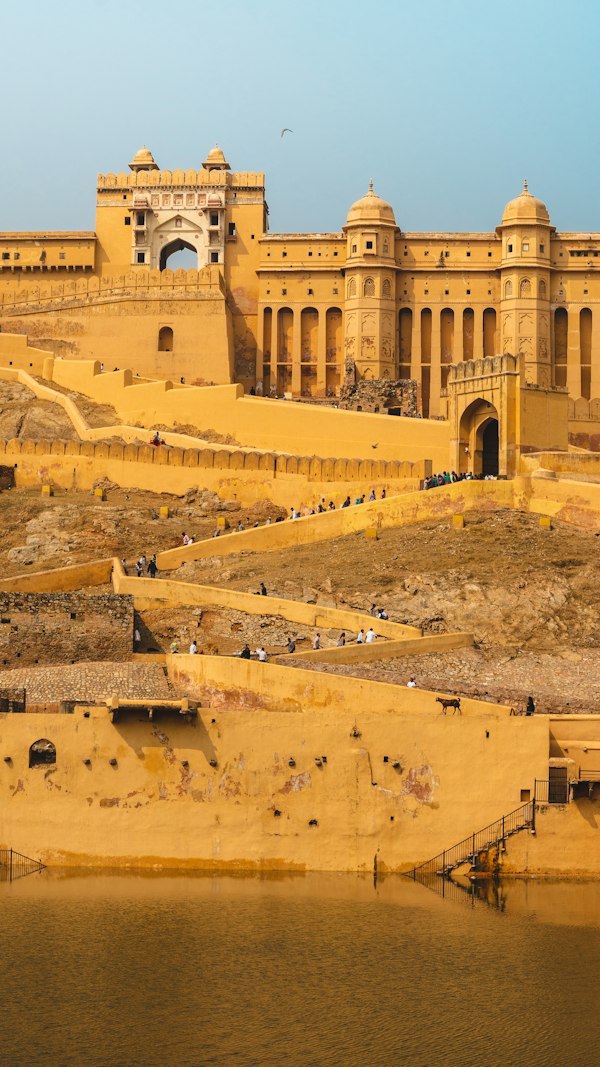
Amber Fort (also spelled Amer Fort) sits on a hilltop 11 km north of the city center. Constructed in 1592 by Raja Man Singh I, this sandstone and marble fortress is celebrated for its artistic Hindu-Rajput elements, particularly the Sheesh Mahal (Mirror Palace) where thousands of tiny mirrors create a dazzling effect by candlelight.
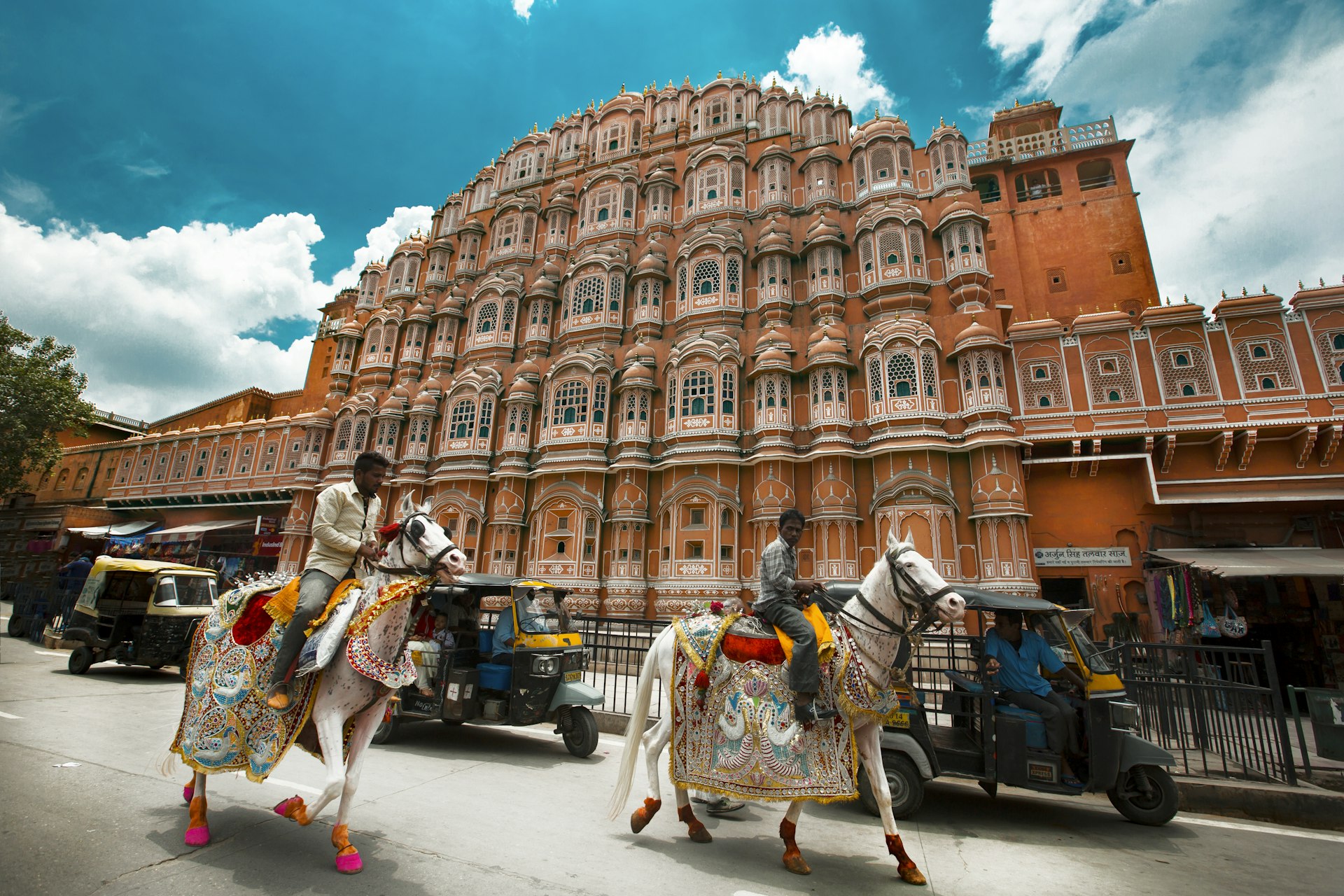
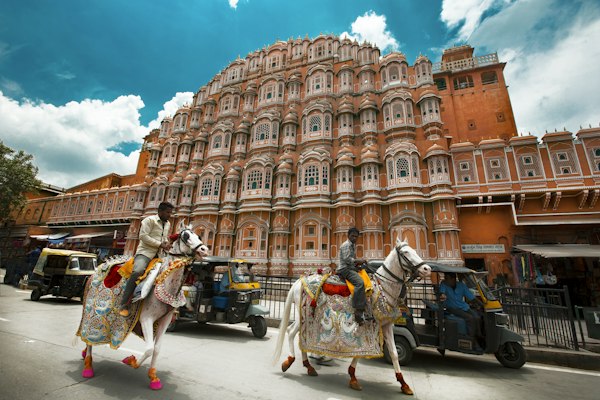
Hawa Mahal, the Palace of Winds, is Jaipur’s most photographed landmark. Built in 1799 by Maharaja Sawai Pratap Singh, its 953-window honeycomb facade allowed royal women to observe street life without being seen.
City Palace remains a working royal residence — the Jaipur royal family still occupies a section of the complex. The Mubarak Mahal and Chandra Mahal offer an extraordinary collection of textiles, arms, and Mughal miniature paintings.
Jantar Mantar, built by the city’s founder in 1734, houses the world’s largest stone sundial (the Samrat Yantra, 27 meters tall) and remains accurate to within 2 seconds, according to the ASI.
How Do You Get Around Jaipur?
The old walled city is compact enough to explore on foot or by cycle-rickshaw. For longer distances, auto-rickshaws are plentiful — expect to pay ₹50-150 for rides within the city. Ride-hailing apps operate throughout Jaipur.
Our Jaipur day tour includes a private air-conditioned vehicle, which is particularly important during the hot months when walking between distant forts becomes impractical. Amber Fort is 11 km from the city center, and Nahargarh Fort requires a steep uphill drive.
What Should You Eat in Jaipur?
Rajasthani cuisine is designed around the arid desert climate, relying on dried lentils, preserved ingredients, and ghee. The quintessential Jaipur meal is dal baati churma — baked wheat balls served with spiced lentils and a sweet crumbled wheat dessert. Laal maas (fiery red mutton curry) is the signature non-vegetarian dish of Rajasthan.
Jaipur’s street food scene centers around Johari Bazaar and the lanes near Hawa Mahal. Pyaaz kachori (onion-stuffed fried pastry) from Rawat Mishthan Bhandar, established in 1950, draws long queues daily. Lassi wala near MI Road has been serving thick, creamy lassi from clay cups since 1944. For a royal dining experience, several heritage hotels offer traditional Rajasthani thalis served on silver platters.
Top Attractions in Jaipur
 jaipur 2-3 hours
 Amber Fort
Amber Fort (Amer Fort) is a majestic hilltop fortress 11 km from Jaipur, blending Rajput and Mughal architecture with the celebrated Sheesh Mahal (Hall of Mirrors).
 jaipur 1.5-2 hours
 City Palace
Jaipur's City Palace is a magnificent complex of courtyards, gardens, and buildings that remains the residence of the Jaipur royal family and houses a world-class museum.
 jaipur 45 minutes – 1 hour
 Hawa Mahal
Hawa Mahal (Palace of Winds) is Jaipur's most iconic landmark, a five-story pink sandstone facade with 953 ornate windows built in 1799 for royal women to observe street life.
 jaipur 45 minutes – 1 hour
 Jantar Mantar
Jantar Mantar is an 18th-century astronomical observation site in Jaipur housing the world's largest stone sundial, a UNESCO World Heritage Site still accurate to this day.
Explore Jaipur on the Map
Tours Covering Jaipur
 3 Days / 2 Nights
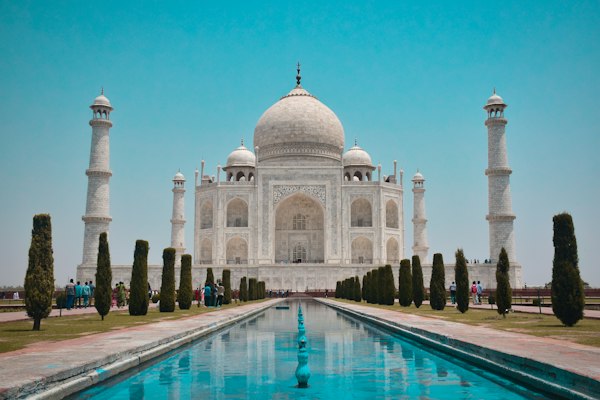
 Golden Triangle Tour — 3 Days
- Sunrise visit to the Taj Mahal
- Guided tour of Red Fort and Jama Masjid in Old Delhi
- Elephant/jeep ride to Amber Fort
5 Days / 4 Nights Golden Triangle Tour — 5 Days
- Sunrise and sunset Taj Mahal views
- Chandni Chowk food walk in Old Delhi
- Amber Fort with Sheesh Mahal candlelight demo
1 Day Jaipur Day Tour
- Amber Fort with Sheesh Mahal (Mirror Palace)
- Hawa Mahal — the iconic Palace of Winds
- City Palace museum and royal collections
Frequently Asked Questions About Jaipur
Plan Your Jaipur Trip
Get a free custom itinerary from our local expert guides.