delhi · attraction
Plan your visit to Humayun's Tomb
Humayun's Tomb is a stunning 16th-century Mughal garden tomb in Delhi, recognized as the architectural precursor to the Taj Mahal and a UNESCO World Heritage Site since 1993.
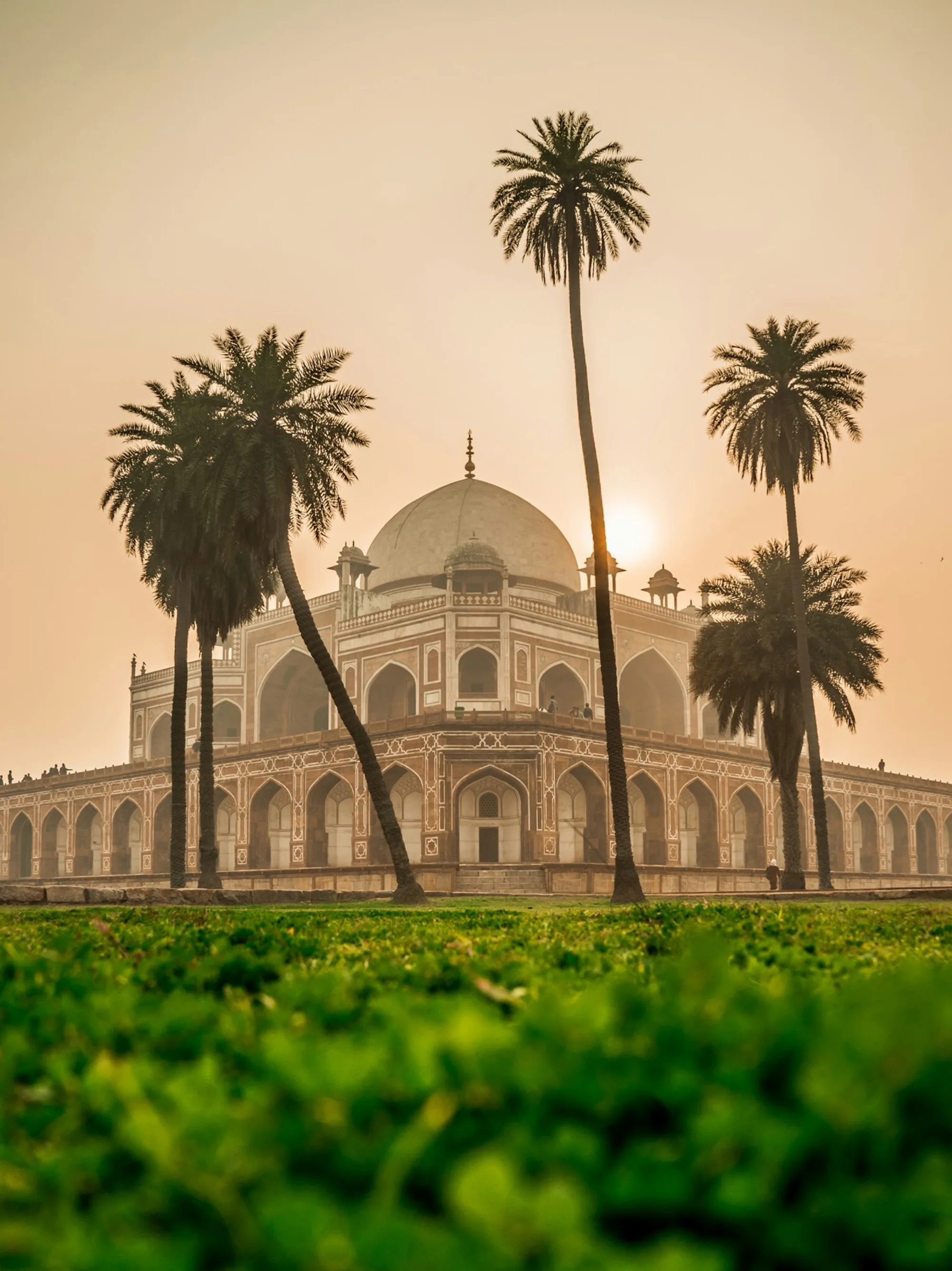
Taj Mahal · East Gate · 06:24 IST
What Is Humayun’s Tomb and Why Is It Important?
Humayun’s Tomb is one of Delhi’s most significant monuments and a milestone in the evolution of Mughal architecture. Built in 1570, it was the first garden tomb on the Indian subcontinent and is widely considered the direct architectural precursor to the Taj Mahal, which followed 62 years later. UNESCO inscribed it as a World Heritage Site in 1993, calling it a cultural milestone in the development of Mughal architecture (source: UNESCO World Heritage List).
The tomb was commissioned by Hamida Banu Begum, the first wife of Mughal Emperor Humayun, nine years after his death. She engaged the Persian architect Mirak Mirza Ghiyas, who introduced Central Asian and Persian design principles — the double dome, the octagonal plan, and the Charbagh garden layout — that became defining features of Mughal architecture.
What Will You See at Humayun’s Tomb?
The main mausoleum is a masterwork of red sandstone and white marble set upon a massive 12,000-square-meter platform. The double dome, an architectural innovation for India at the time, rises 42.5 meters above ground level. Inside, the central octagonal chamber houses the cenotaph of Humayun, surrounded by over 150 additional graves of Mughal royals, making it a virtual necropolis of the dynasty.
The surrounding 30-acre Charbagh garden was meticulously restored by the Aga Khan Trust for Culture between 2003 and 2013, a project that involved replanting 2,500 trees, restoring 128 water channels, and rehabilitating 12 fountains (source: Aga Khan Trust for Culture).
The complex also includes Isa Khan’s Tomb (1547), an octagonal tomb predating Humayun’s by over 20 years, and the Nila Gumbad (Blue Dome), a striking tile-covered structure recently restored to its original glazed blue appearance.
How Should You Plan Your Visit?
Humayun’s Tomb is located in Nizamuddin East, about 7 km from Connaught Place. We include it in our Delhi day tour, typically scheduling it for the afternoon alongside the Qutub Minar.
The site is open daily from sunrise to sunset and is considerably less crowded than the Red Fort or Qutub Minar. Late afternoon light, when the red sandstone glows warmly, is particularly beautiful for photography.
We recommend combining your visit with the Hazrat Nizamuddin Dargah, the revered Sufi shrine of Nizamuddin Auliya, located just 500 meters away. Thursday evenings feature live Qawwali devotional singing — an unforgettable cultural experience.
Photo Gallery
Location
Mathura Road, Nizamuddin East, New Delhi 110013
More Attractions in Delhi
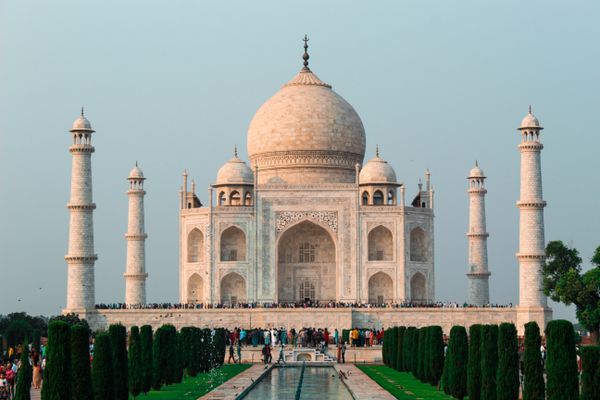 delhi 30-45 minutes
 India Gate
India Gate is a 42-meter war memorial on the Kartavya Path in New Delhi, commemorating 82,000 soldiers who died in World War I and the Third Anglo-Afghan War.
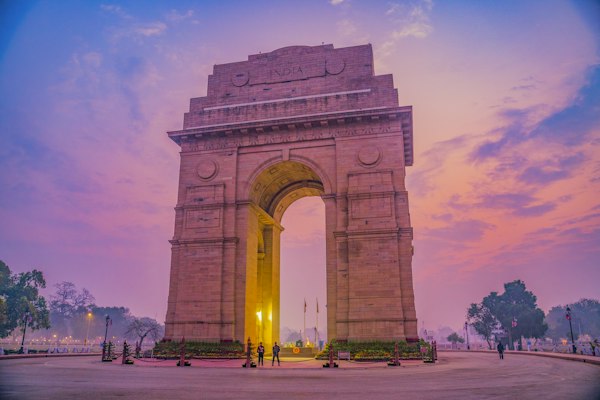 delhi 1-1.5 hours
 Qutub Minar
Qutub Minar is a 72.5-meter victory tower in south Delhi, the tallest brick minaret in the world, surrounded by a complex of medieval monuments dating back to 1193 CE.
delhi 1.5-2 hours Red Fort
The Red Fort (Lal Qila) in Old Delhi is a 17th-century Mughal fortress spanning 254 acres, serving as the ceremonial and political center of the Mughal Empire for nearly 200 years.
Tours Including Humayun's Tomb
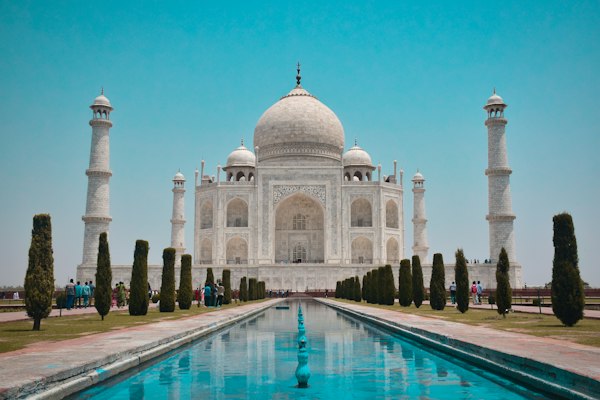 2 Days / 1 Night
 Agra Overnight Tour from Delhi
- Sunrise visit to the Taj Mahal
- Sunset at Mehtab Bagh with Taj Mahal views
- Guided tour of Agra Fort and Baby Taj
1 Day Delhi Day Tour
- Red Fort and Jama Masjid in Old Delhi
- Chandni Chowk bazaar and street food tasting
- Humayun's Tomb — precursor to the Taj Mahal
3 Days / 2 Nights Golden Triangle Tour — 3 Days
- Sunrise visit to the Taj Mahal
- Guided tour of Red Fort and Jama Masjid in Old Delhi
- Elephant/jeep ride to Amber Fort
Frequently Asked Questions
What is the entry fee for Humayun's Tomb?
Indian nationals pay ₹35 and foreign tourists pay ₹550. The ticket covers the entire complex including the main tomb, Isa Khan's Tomb, Bu Halima's Garden, and the Arab Serai enclosure.
Why is Humayun's Tomb considered the precursor to the Taj Mahal?
Built in 1570, Humayun's Tomb was the first garden tomb in the Indian subcontinent and established the architectural template that culminated in the Taj Mahal 62 years later. It introduced the concept of a grand mausoleum set within a Charbagh garden on a raised platform.
Who built Humayun's Tomb?
It was commissioned by Hamida Banu Begum, the senior wife of Emperor Humayun, nine years after his death. The architect, Mirak Mirza Ghiyas (also known as Mirak Ghiyathuddin), was a Persian architect brought from Herat.
How long does it take to visit Humayun's Tomb?
The main tomb takes about 45 minutes. If you include Isa Khan's Tomb, the Nila Gumbad, and the gardens, plan for 1 to 1.5 hours. A guided tour adds rich historical context.
How do I reach Humayun's Tomb?
The nearest metro station is JLN Stadium on the Violet Line, about 1.5 km away. Alternatively, take an auto-rickshaw or taxi to the entrance on Mathura Road, Nizamuddin East.
Plan your trip
Want a Guided Tour of Humayun's Tomb?
Our licensed guides bring history to life with stories and insights you won't find in any guidebook.